
Lake Wakatipu history before the steamship
Lake Wakatipu history begins with Māori connections to the lake and the wider landscape. The statutory acknowledgement published in 1998 records seasonal settlements, mahinga kai and links with pounamu routes beyond the head of the lake. These relationships place the water within a network of movement and gathering, rather than an empty setting waiting for later development.
Read the modern landscape with that longer history in mind. A lake journey, a shore stop and a view towards Glenorchy can all prompt questions about how people used and travelled through this place. Māori connections belong at the start of that account, before the steamship and the industrial remains visible around the shore.
For the physical landscape, the lake facts guide explains the glacial basin and the seiche. Here the focus is on cultural connections, an attributed traditional story and the later role of shipping. Keeping those threads distinct makes each easier to understand.
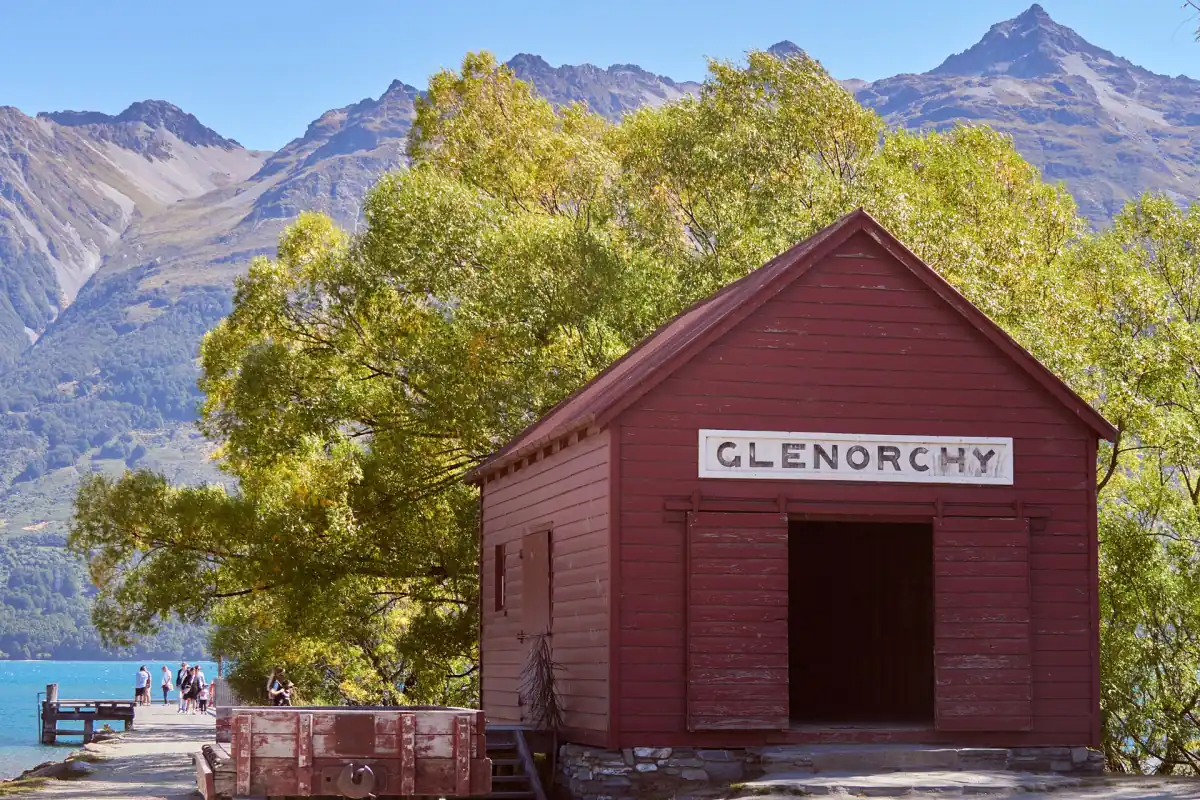
Matau, Manata and Matakauri
The 1998 statutory acknowledgement tells a story involving Matau, the captive Manata and her rescue by Matakauri. In that telling, a fire leaves the hollow that becomes the lake, while a surviving heart accounts for the water's rhythm. It is a narrative associated with the place, to be read as a story rather than as an explanation of glacial geology.
Ngāi Tahu teaching material from 2024 cautions against presenting the popular version linked there as an established Ngāi Tahu creation tradition. Attribute the telling to the historical acknowledgement when discussing it, and keep room for careful cultural interpretation. The physical oscillation of the water is described separately as a seiche.
Steamship cruise
See the lake aboard a steamship on a sightseeing cruise with commentary.
Hand-picked tours, booked through GetYourGuide. Prices are indicative starting prices in US dollars (as of October 2026). Tap a tour for live availability and the current price in your currency.
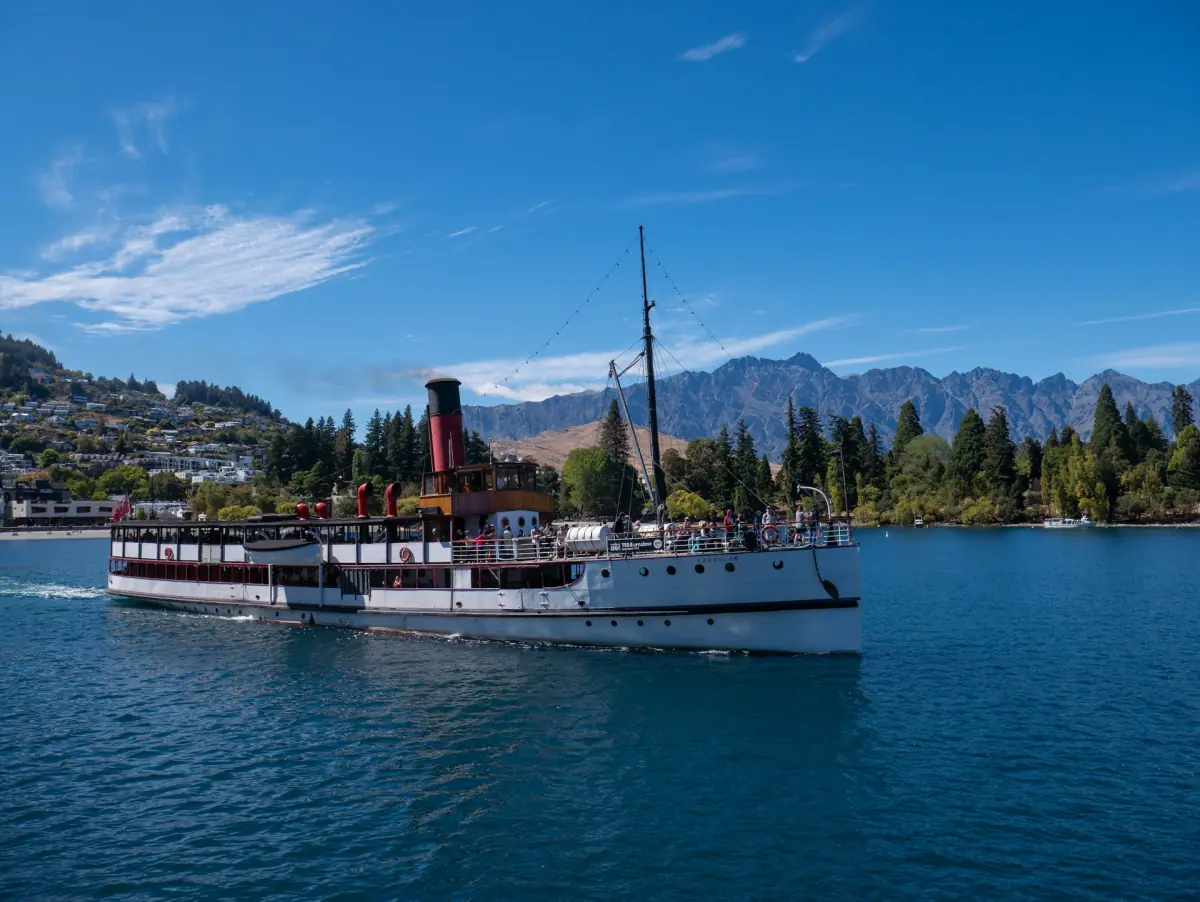
A steamship view of the lake
A sightseeing cruise includes guide commentary and offers a way to experience the water once used to carry people, mail and goods.
A working link for lakeside communities
The steamship TSS Earnslaw was commissioned for New Zealand Railways to serve the lake communities. Its maiden voyage took place on 18 October 1912. It carried people, livestock, mail and goods. Those everyday loads help explain the vessel's historical purpose: it was part of the movement of people and supplies across the lake.
That working role adds context to a sightseeing trip today. Think about the difference between viewing the shore for pleasure and relying on transport across the water. The same setting can be understood through both experiences, while the earlier Māori connections remain part of the longer account.
The featured steamship outing includes a sightseeing cruise and knowledgeable guide commentary. It departs from Steamer Wharf on Beach Street in Queenstown. Food and drinks are extra. Choose it as a commented boat journey with a historical vessel, rather than expecting a specialist history seminar or a guided visit to every place discussed here.
Bob's Cove and the lime kiln
At Bob's Cove, also known as Punatapu, DOC describes a surviving lime kiln from the nineteenth century. Limestone was worked by the Wakatipu Lime Company, and eucalyptus trees were planted for fuel. These details connect the shore with an industrial use of the surrounding land and resources.
Visit using the marked track from the car park on the Glenorchy-Queenstown Road. The approach runs through native bush to the shore, with a short, steep branch towards Picnic Point. The walking page explains the access and route choices. Treat the cove as a separate shore visit when arranging the day.
Walter Peak and the boat journey
A pure sightseeing cruise and a farm visit are different ticketed experiences. Farm tours and BBQ meals belong with the relevant farm products. For that part of the lake, use the separate guide to Walter Peak. Keep a simple lake cruise focused on its boat journey and commentary.
Compare the different forms of lake cruise before choosing a departure. A day can combine historical context with time on the water without needing to treat every stop as a museum visit. Select the experience for what it includes, then use the shore guides for places explored independently.
Questions about the lake's history
Did the area's history begin with European shipping?
Māori seasonal settlements, mahinga kai and pounamu-route connections preceded it. The 1998 statutory acknowledgement records those connections.
When was the steamship's maiden voyage?
It took place on 18 October 1912. The ship carried people, livestock, mail and goods for lakeside communities.
Is the Matau story a geological explanation?
It is an attributed traditional narrative in a historical acknowledgement. Glacial basin formation and the seiche are physical processes described separately.
What historical feature is at Bob's Cove?
DOC describes a nineteenth-century lime kiln, limestone working and eucalyptus planted for fuel. Use the marked walking approach for a shore visit.